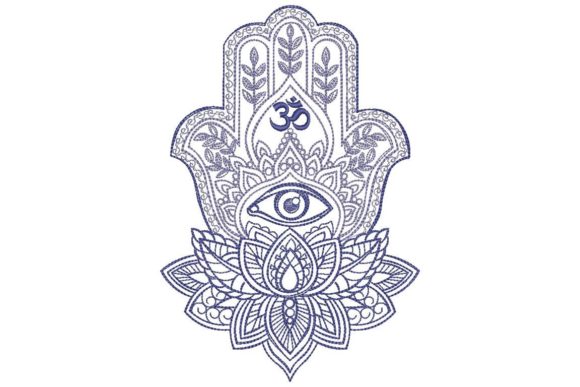
Lotus Hamsa Embroidery: A Designer’s Honest Review
When a new embroidery file lands in my library, my first question is always practical: will this design hold up in a real project? Not just on the screen, but stitched out on fabric, under the scrutiny of a client or a customer. Today, I’m looking at the Lotus Hamsa, a machine embroidery design that promises to bring positive energy and good vibes into your creations. Let’s walk through what this means for you as a crafter, small business owner, or apparel decorator.
The Immediate Visual Personality
The Lotus Hamsa design combines two deeply symbolic shapes: the protective Hamsa hand and the serene lotus flower. My first impression is one of balanced intricacy. It’s not an overly minimalist file, nor is it a chaotic, dense pattern. The layout feels intentional, with the lotus nestled within or alongside the Hamsa, creating a focal point that’s both recognizable and unique. This visual personality leans toward the Wellness category naturally—it feels calming, meaningful, and slightly ornate without being fussy. For anyone building a brand around mindfulness, spiritual symbols, or simply beautiful botanical motifs, this design has a ready-made mood.
Where This Design Naturally Belongs
Imagine you’re preparing a custom order for a client who wants a personalized gift—a tote bag for a yoga teacher, perhaps, or a pillow cover for a meditation space. The Lotus Hamsa would be a compelling choice. Its theme lends itself perfectly to products that carry an intention. I can easily see it stitched onto:
- Organic cotton tote bags for a small shop
- Comfortable sweatshirts or hoodies for boutique apparel
- Delicate baby blankets or nursery decor items
- Simple tea towels or aprons as thoughtful holiday gifts
- As a stand-alone embroidered patch for customers to apply themselves
The key here is that the design carries enough visual weight to feel substantial on a product, but its symbolism likely avoids being too niche or polarizing. It’s broadly appealing.
Performance in Real-Life Embroidery Situations
Now, let’s get into the nitty-gritty of how this file would perform when the needle starts moving. Since the description mentions it comes with multiple embroidery files, I’m hopeful there are versions optimized for different contexts. For a project like a heavyweight sweatshirt, a design with this level of detail needs careful stabilization. The potential satin stitch borders and fill stitch areas within the lotus petals and Hamsa details will require a good stabilizer to prevent puckering, especially on knit fabrics.
On a smooth, flat surface like a kitchen towel or a tote bag, I anticipate cleaner results. The stitch density will be crucial to examine. If the design is overly dense, it could become stiff and uncomfortable on wearables; if it’s too sparse, the details might lose clarity. This is why testing on scrap fabric first is non-negotiable. Run a test on both a light and a dark background to see how the thread color contrast works. Does the design rely on fine outlines that might vanish on a dark fabric? Does it have tiny lettering or intricate corners that could blur on a textured fabric? Your test stitch-out will answer these questions.
Caution Zones: Where to Use Carefully
Every design has its ideal applications and its challenging ones. For the Lotus Hamsa, I’d approach certain projects with extra planning.
- Small Hoop Sizes: If the design is large or highly detailed, forcing it into a small hoop for a cap or a baby item sleeve might compress the elements and lose the elegance.
- Stretchy or Thin Fabrics: On a thin t-shirt or a stretchy athletic wear fabric, the design’s integrity could be compromised without the right stabilizer combination.
- Curved Surfaces: Embroidering this onto a curved cap brim requires considering how the Hamsa’s symmetrical shape will distort. A simplified file version might be better here.
- Products for Frequent Washing: For items like aprons or towels that see heavy use, ensure the stitch structure is robust. Tight, dense fills can sometimes be more prone to snagging.
These aren’t reasons to avoid the design; they’re simply reminders to match the design’s characteristics to the product’s demands.
The Impact on Your Business and Craft
From a commercial perspective, using a design like the Lotus Hamsa affects more than just the stitchout. It influences customer perception. A well-executed embroidery of this nature on a handmade product conveys care and skill. It elevates a simple tote bag from a commodity to a meaningful object, increasing its perceived value and giftability. For an Etsy seller or a craft fair vendor, having a product line that incorporates such recognizable, positive symbols can create brand consistency and engage buyers looking for something with soul beyond generic graphics.
In digital product mockups for your shop, the Lotus Hamsa can serve as a beautiful design asset. When creating printable mockups to showcase your finished products, a clean, detailed embroidery like this makes the preview look professional and enticing. It builds customer trust that the actual item will be of high quality.
Practical Designer Notes Before You Stitch
Before you commit this design to a client project or a batch of small shop merchandise, here’s my checklist:
- Test, Always Test: Stitch it out on a scrap of your target fabric. Observe the stitch clarity, especially in the overlapping areas of lotus and Hamsa.
- Check Color Contrast: Plan your thread palette. Does the design need high contrast to pop, or would a tonal, subdued scheme work better for your product vision?
- Review File Details: The product description mentions multiple files. Identify which file format and hoop size range is appropriate for your machine and your specific project. Don’t assume compatibility.
- Consider Licensing: This is critical for commercial embroidery. Confirm the license terms before selling finished items or digital products featuring the design. Is it for personal use only, or does it allow commercial use? This information is foundational for your business.
- Inspect Small Details: Look closely at the test stitchout for any potential issues with very small detail areas. These can sometimes be the first to show problems.
- Match Stabilizer to Fabric: Your stabilizer choice will make or break the final look on challenging fabrics like textured linens or stretchy knits.
Embroidery, at its best, is a partnership between a beautiful digital file and your skilled execution. The Lotus Hamsa design presents a lovely, symbol-rich opportunity. Its success in your real-world projects—whether a custom apparel order, a holiday gift, or a line of boutique merchandise—will hinge on that practical partnership. Approach it with the careful preparation any professional designer would, and it has the potential to bring that promised positive energy not just into your creations, but into your customers’ experiences as well.