A Designer’s Review of People Holding Hands Embroidery
When planning a new collection for my boutique apparel line, I spend a lot of time browsing Creative Fabrica embroidery designs. The goal is always to find files that feel authentic, translate well onto fabric, and add tangible value to a garment. Recently, I’ve been considering the People Holding Hands machine embroidery design for a series of sweatshirts and hoodies. Here’s my genuine take, from a professional designer’s perspective, on how this design might perform in real-world projects.
First Impression: Visual Mood and Decorative Strength
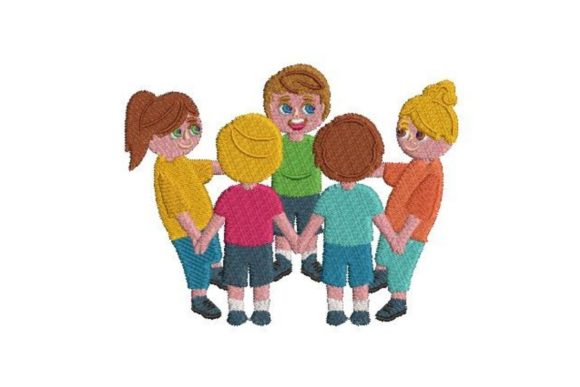
The People Holding Hands design immediately struck me as having a warm, unified personality. It carries a gentle, kind narrative that feels both classic and subtly trendy. For apparel decorators, this translates to a design that isn’t overly loud or cute; it’s more about a soft, meaningful statement. The detail level appears balanced—not so minimal that it feels sparse, nor so dense that it becomes a stitching challenge on stretch fabrics. It leans towards a premium, casual aesthetic, perfect for brands wanting to evoke connection and community without being overtly feminine or rustic.
Perfect Placement for Sweatshirts and Hoodies
Thinking about my upcoming sweatshirt collection, I envision People Holding Hands working beautifully in several key placements.
Chest Placement for a Focused Statement
For a standard crewneck sweatshirt or hoodie, a centered chest placement is a safe and effective choice. The design’s composition would create a focal point that isn’t overwhelming. On a neutral sweatshirt—think heather grey, cream, or black—this embroidery would pop with thoughtful thread color contrast. Using a contrasting thread on dark apparel, or a tonal thread on pastel hoodies, can dramatically change the mood.
Back Designs for Oversized Garments
On an oversized sweatshirt or hoodie, a larger version of the design on the back could be stunning. This placement turns the garment into a true statement piece. It’s ideal for lifestyle product photos and Etsy listings, as it creates a strong visual in modeled shots.
Sleeve Accents and Tote Bag Designs
For a more subtle application, consider a smaller version on a sleeve cuff or a tote bag. This works wonders for creating visual consistency across a product line—maybe a sweatshirt, a tee, and a tote bag all featuring the same design in different sizes. It boosts product recognition for a small brand.
Where to Use the Design With Care
Even with a promising design, practical considerations are crucial for a professional presentation and to maintain buyer trust.
- Small Chest Placement on Stretchy Fabric: If you’re hooping a very small area on a fleece or ribbed fabric, be mindful of potential distortion. The interconnected elements of People Holding Hands need a stable foundation.
- Dense Stitch Areas: Without knowing the exact stitch count from the product page, I always advise testing on scrap fabric first to inspect the stitch density. High density on thick fleece can lead to puckering.
- Curved Surfaces: On the curved shoulder area of a sweatshirt or the pocket of a denim jacket, hoop placement and stabilizer choice become even more important. A good cut-away stabilizer is often my go-to for these scenarios.
- Dark Garments: Embroidery on dark fabrics requires impeccable thread coverage. Testing helps you decide if you need to adjust thread colors or potentially use a backing to prevent the fabric shadow from showing through lighter threads.
Adding Value to Your Boutique Brand
Using a design like People Holding Hands isn’t just about decoration; it’s about building brand identity. This design carries an emotional resonance—friendship, support, unity—that can deeply resonate with customers. When a garment feels meaningful, it increases customer engagement and can transform a simple sweatshirt into a cherished item. This, in turn, elevates the perceived value of your handmade product.
For Etsy sellers and small shop owners, this kind of design also lends itself well to storytelling in your listings and social media graphics. You can talk about the inspiration, the message of kindness, and how it complements a cozy, seasonal outfit. This authenticity builds a stronger connection than a generic graphic.
Practical Designer Notes Before You Start Production
Before I commit any digital embroidery file to a production run, I follow a standard set of checks. Here’s what I’d do with People Holding Hands:
- First, I would test on scrap fabric that matches my intended garment fabric—a piece of sweatshirt fleece, jersey for tees, or denim.
- I would experiment with different stabilizer choices to find the one that gives the cleanest finish without compromising the fabric’s drape.
- I would review the thread color contrast palette. Sometimes the suggested colors from a printable mockup need adjustment for real fabric.
- I would confirm the hoop size required by checking the design details on Creative Fabrica. The description mentions it’s a machine embroidery design, but specifics like exact hoop size and compatible file formats are essential to check before proceeding.
- I would stitch out the design and inspect stitch density and overall integrity, especially in any areas where the hands connect.
- Finally, I would always check Creative Fabrica product details and licensing thoroughly to ensure my use for commercial embroidery products is fully covered.
Final Thoughts for Your Apparel Projects
The People Holding Hands embroidery design from the Friends category has solid potential for boutique apparel decorators. Its visual mood is warm and inclusive, making it suitable for a range of custom apparel from casual sweatshirts to more thoughtful tote bags. Its success, however, hinges entirely on meticulous preparation: testing, stabilizing, and understanding the design’s parameters on your specific fabrics.
By investing that time, you can create a finished product that looks professionally crafted, enhances your brand’s story, and truly connects with your audience. It’s a design that, when executed well, can make a simple garment feel special and kind—which is ultimately what many customers are looking for.