From Digital File to Craft Fair Cash: A Designer's Review of Pepper
As an embroidery designer who sells at markets, my first task with any new design isn't just stitching it out—it's evaluating its potential on my sales table. Today, I'm looking at Pepper. The description says it's a superb embroidery design for upcoming projects, coming in multiple file formats. That's the technical side. The real question is: how does Pepper translate into a product that a customer at a busy craft fair will notice, understand, and buy?
First Impression: Where Pepper Finds Its Mood
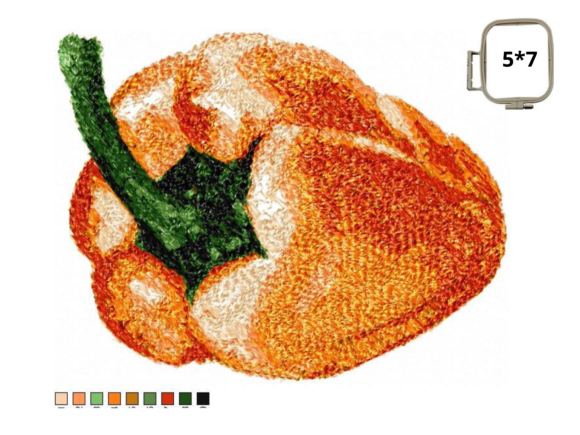
Without seeing the exact stitches, the name Pepper gives a strong direction. This isn't a vague floral or abstract shape. Pepper implies a food theme, likely a specific vegetable or spice. This clarity is a huge advantage at a market. From a glance, I can already imagine its mood: it likely leans toward rustic, farmhouse, or modern kitchen aesthetic. It could feel decorative, perhaps even a touch elegant if rendered with clean lines. This isn't a funny or festive design; it's a staple. That means it has a timeless, everyday appeal that can work across seasons, which is perfect for building a consistent product line.
Product Stage: Where Pepper Will Stand Out on the Sales Table
When planning my booth, I think about visual hierarchy. Which products get the prime front-of-table spot? Pepper, as a food-themed embroidery design, has a natural home.
The Kitchen & Market Bag Dominance
For Pepper, the most obvious and likely strongest sellers will be kitchen textiles. An apron embroidery featuring Pepper, especially on a pocket or chest panel, would be instantly understood. It communicates a love for cooking, gardening, or fresh food. Tea towel embroidery is another winner—a practical, giftable item where a single, well-placed Pepper can turn a plain towel into a charming, premium-looking handmade product. On a tote bag design or market bag, Pepper adds a thematic, rustic touch that appeals to shoppers looking for personality in their everyday carry.
The Accent & Giftable Potential
Not every design needs to be a large focal point. Pepper might excel as a smaller, repeated accent. Think of a series of embroidered patches featuring Pepper—these could be sold individually or applied to pouches and caps. A small Pepper on the front of a fabric pouch or the corner of a pillow cover adds subtle decoration. For caps, the success depends on the design's detail; a simplified, bold Pepper could work well on the curved surface.
Production & Practicality: Turning Pepper into Profitable Products
This is where the designer's experience meets the maker's reality. A superb machine embroidery design isn't just about looks; it's about how smoothly it runs through batch production for your craft fair inventory.
Understanding at a Glance: The Customer's Quick Decision
At a bustling fair, customers decide in seconds. Pepper, being a named food item, has high recognition. They don't need to puzzle over what it is. This immediate understanding speeds up the buying decision. For online sales, like for Etsy sellers, this also helps in photographs. A Pepper embroidered patch on a dark apron still clearly reads as "Pepper," assuming good thread contrast. This clarity boosts perceived value and handmade quality.
Batch Production & Repeatability
Before I commit to making twenty Pepper tea towels, I need to assess the design's stitch density and runtime. The description doesn't give specifics, so here's my real-world checklist: I must test the design on scrap fabric first. I'll check for any overly dense stitch areas that could pucker on textured towels or require heavy stabilizer. I'll review if there are tiny details or small lettering that might lose clarity when stitched small on a cap or pouch. I confirm the hoop size needed and whether it allows for efficient multi-hooping. Finally, for commercial embroidery, I always verify the licensing terms of the digital embroidery file to ensure I can sell the finished products.
Visual Appeal & Booth Strategy
Pepper affects more than just the single item it's on; it contributes to your booth's entire story.
Building a Cohesive Food Theme
If Pepper is part of a larger food-themed collection, it becomes a powerhouse for brand consistency. A table with Pepper aprons, matching tea towels, and tote bags creates a dedicated section that attracts customers interested in kitchen decor or gourmet gifts. This thematic grouping increases buyer engagement and can lead to multiple-item sales.
The Importance of a Real, Physical Mockup
Never rely solely on a printable mockup for your judgment. For Pepper, I will create at least one real, stitched sample on the final product fabric—like a tea towel or bag scrap. This lets me see the true thread colors, how the fabric texture interacts with the stitches, and the physical weight and feel of the embroidery. This sample then becomes my best booth display piece; customers touch and examine real embroidery, not a flat image.
Careful-Use Notes for the Professional Maker
Based on general experience with food-themed designs, here are my focused considerations for Pepper.
- Fabric Color Choice: Pepper might need high contrast. On dark fabric, a light or bright thread palette is essential. I'll compare fabric colors against my test stitch.
- Scale Flexibility: Can Pepper be stitched small for a patch and large for a pillow cover without losing its character? This versatility maximizes its use across different small shop products.
- Photography for Online Sales: For my Etsy listing, I'll photograph Pepper on products in a natural kitchen or market setting. The context reinforces its purpose and appeal.
- Stabilizer Selection: The right stabilizer for the base fabric (like a drapey apron versus a sturdy tote) is critical to keep Pepper looking sharp and professional, not distorted.
The Final Verdict: Pepper's Place in Your Product Line
Pepper, as a named food embroidery design, enters the market with a built-in advantage: specificity. It's not "a vegetable"; it's Pepper. This makes it a reliable, thematic anchor for a kitchen or farmhouse-style product range. Its potential shines on practical, giftable items like tea towels and aprons, where its rustic or decorative mood elevates everyday objects. For the embroidery business owner, its success hinges on the practical production details—stitch density, clarity at various sizes, and licensing—all of which must be confirmed from the actual design files. If those elements are sound, Pepper can move from a digital file to a standout, attention-grabbing item on your craft fair table, inviting customers into a story of handmade, thoughtful kitchen charm.