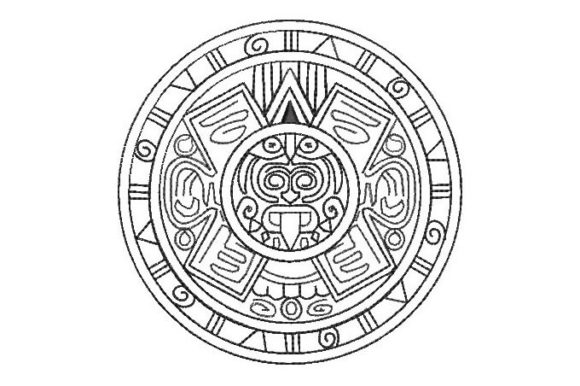
Practical Impressions of The Aztec Calendar Embroidery Design
When I first opened the file for The Aztec Calendar, my immediate reaction wasn't about its historical accuracy, but its sheer visual weight. This isn't a delicate, whimsical motif. It's a statement piece. The central sun face, surrounded by those intricate, geometric rings, creates a focal point that commands attention. The mood it establishes is one of grounded strength and ancient artistry. It feels substantive. For an embroidery designer looking to add products with presence—not just decoration—to their lineup, that’s a powerful starting point.
Where This Design Finds Its Natural Home
Thinking about real projects, I mentally place this design onto different surfaces. The product description suggests pillows and framed pieces, which are excellent starting points. A large decorative pillow for a study or a living room with neutral tones would be stunning. But my mind goes straight to custom apparel for a client who wants something truly unique. Imagine this centered on the back of a heavyweight, natural-colored sweatshirt. The texture of the fabric would complement the design's earthy feel, and the size would allow all the details to breathe. It would move beyond a generic logo into a wearable piece of art.
For small business owners, especially those selling in niches like boutique festival wear or artisan-themed goods, this design could become a signature. Embroidered on a simple canvas tote bag, it transforms a utilitarian item into a conversation piece. I also picture it as a framed hoop art piece for nursery or office decor with a more global, educational theme. It’s versatile, but its versatility leans toward products where it can be the star, not a tiny accent.
A Scenario: The Boutique Tote Bag Project
Let’s walk through a real case. I’m preparing a batch of tote bags for a small shop’s spring collection. The owner wants designs with cultural depth. I load The Aztec Calendar, choosing a medium-large hoop size to capture the rings. I opt for a rich, copper-toned thread for the main elements on a cream-colored canvas. After stitching, the result is exactly what I anticipated: a bold, clean image. The concentric circles create a satisfying sense of order, and the central figure is crisp. A customer isn't just buying a bag; they’re buying a specific aesthetic—one that feels handcrafted and intentional. That perceived value is crucial for Etsy sellers and craft fair vendors.
Performance Considerations on Real Surfaces
This is where practical judgment comes in. The design’s complexity, with its layered rings and detailed central icon, means stitch density is a key factor. On a standard cotton or canvas, it will look magnificent. On a thinner fabric like a lightweight linen tee, you’d need a very good stabilizer to prevent puckering, and I’d be cautious. The design's success hinges on clean lines, so fabric texture matters. A highly textured fabric like a loose-knit sweater might obscure some finer details.
For apparel decorators considering caps or curved surfaces, the perfect circularity of the design could be challenging. Hooping and stabilizing on a curved cap brim would require extra care to keep the symmetry intact. Conversely, on a flat, stable surface like a tea towel or pillow cover—as suggested in the description—it’s a much more straightforward and reliable stitch.
Color choice is paramount. This design thrives on contrast. Stitching it on a dark fabric like a black apron would require a thoughtful thread palette—perhaps metallic or bright gold threads to maintain visibility and impact. On light backgrounds, earthy tones like terracotta, forest green, and deep blue would bring out its ancient character. Always, always test on scrap fabric first with your chosen colors and stabilizer.
Points for Careful Application
There are places where I would hesitate. Small hoop sizes would compress the details, potentially making the inner rings a dense, muddy area. This isn't a design for a tiny baby outfit emblem unless drastically simplified. Similarly, on stretchy fabrics without proper stabilization, the fill stitches could distort. And for products destined for frequent, heavy washing—like kitchen towels—you’d want to ensure your thread and stitch technique are robust to maintain longevity. The design itself has the integrity; the execution must match it.
The Impact on Your Business and Craft
From a commercial perspective, using The Aztec Calendar elevates your work. It signals to customers that you offer designs beyond the commonplace. For a creative entrepreneur making personalized gifts, a framed version of this for a graduate studying history or anthropology would be a deeply thoughtful present. Its recognizability, while not overly mainstream, carries a weight of sophistication.
For digital product sellers offering finished items or using the design in mockups, it provides a strong visual asset. In a printable mockup for an online store, it clearly communicates “handmade” and “artisan.” It boosts buyer engagement because it’s distinctive. In a crowded market, distinctiveness is your currency.
However, professionalism means doing your homework. The product category is Around The World and the type is Embroidery, which fits. Before running any commercial embroidery project or selling finished products, confirm the licensing terms for this machine embroidery design. Does it allow for commercial use? Always verify this to protect your craft business.
Final Designer Notes Before You Hoop
My final thoughts are procedural. Test the embroidery file not just in color, but imagine it in black and white mockups to gauge its form independent of color. Review the small details in the preview; are there any tiny elements that might become lost or require a trim change? Compare how it looks conceptually on both light and dark fabric backgrounds in your mind—does it suit your typical product line?
Use the proper stabilizer for your chosen fabric. This design deserves a foundation that lets it shine. Check the natural hoop size that feels right—likely a medium or large—to preserve clarity. And most importantly, stitch it with confidence. When a design has this much inherent strength, like The Aztec Calendar, your job as the maker is to translate that strength into thread with care and precision. The result, on a pillow, a tote, or a framed piece, will be a finished product that doesn’t just look good; it feels considered and authentic.