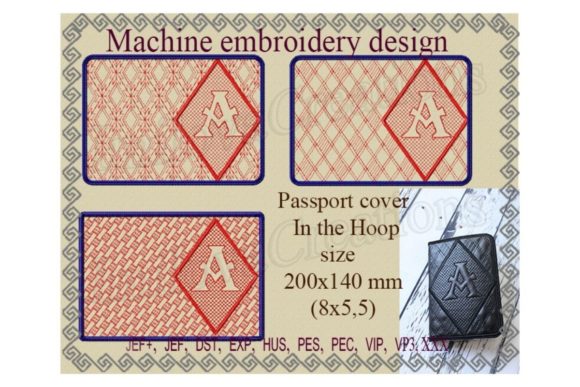
Reviewing the In the Hoop Passport Cover Design for Business
First Impressions: A Statement Piece for Branded Merchandise
When evaluating a design like In the Hoop Passport Cover -a for small business use, the first consideration is its visual personality. The description hints at a "fancy" and "magnificent" final result. This suggests a design with a sense of premium craftsmanship and intricate detail. For a business, this translates into an asset that feels elegant, handmade, and deliberately professional. It’s not a simple, stark logo; it’s a decorative element that carries weight. This initial impression is crucial. For a boutique, café, creative studio, or any brand wanting to convey care and artistry, this design can elevate a basic item into a signature piece.
Real-World Business Applications: Beyond the Passport Cover
The true value of a machine embroidery design lies in its versatility across your entire merchandise line. While categorized as an Accessories design, In the Hoop Passport Cover -a should be viewed as a core design asset. Its intricate, finished look makes it a prime candidate for adaptation.
As an Embroidered Patch: This is one of the most powerful applications. A patch version can be applied to staff uniforms, aprons, or work shirts, creating a consistent brand identity. For a pet brand or bakery, it could become a recognizable chest logo on polo shirts. As a sleeve detail on a chef’s jacket, it adds a touch of premium handmade product pride.
For Custom Apparel & Merch: The design’s decorative nature works beautifully on tote bag designs, especially as a central mark. For event merchandise or customer gifts, it can transform a simple cap or beanie. Imagine this design embroidered on the front of a cap for a florist’s workshop or a local café’s loyalty program—it instantly feels more valuable than a standard printed logo.
Branding Physical Products: For Etsy sellers and handmade shops, this could serve as a branded add-on sewn onto product packaging, like a small patch on a kraft paper bag, or even directly onto a handmade product like a journal cover. It acts as a seal of authenticity.
Strategic Placement and Careful Execution
With a detailed, "fancy" design, placement and execution are key to maintaining its quality in commercial embroidery.
Consider Size and Surface
The note that it "will come in multiple sizes" is vital. Before production, you must test it at a small patch size. A design meant for a passport cover might have dense details that need simplification for a small cap front or a curved surface like a sleeve. Always create a mockup for client approval, perhaps using a printable mockup, to visualize the final scale on the actual item.
Master the Technical Details
Stitch density is a critical factor. High density can make a design stiff and unsuitable for flexible fabrics like on a cap or a soft apron. It’s wise to test on real fabric—the actual uniform material or tote bag canvas—using the proper stabilizer. Fabric texture and color also matter. Embroidering this design on dark uniforms requires careful thread color contrast planning to ensure the intricate details remain visible. Items that need frequent washing, like aprons or work shirts, must withstand the process without stitches pulling or fading.
- Always test in black and white first to check the fundamental structure and spacing of the design.
- Inspect the spacing of elements to ensure tiny lettering or detailed outlines remain clear at your intended hoop size.
- Compare it beside your other brand assets to ensure visual consistency across all your merchandise.
- Confirm commercial licensing before business use. While the description doesn’t specify terms, always verify that your digital embroidery file purchase allows for production on items you sell.
Building Brand Identity and Customer Trust
Implementing a design like In the Hoop Passport Cover -a across your business touchpoints does more than decorate; it builds your brand.
On staff uniforms, it fosters a sense of team professionalism and pride, which customers notice. On merchandise like caps and tote bags, it increases the product value, making it feel less like generic swag and more like a desirable accessory. This enhanced perception drives buyer engagement and can turn a customer into a brand advocate.
For a small business, consistent use of a distinctive, high-quality embroidered mark across aprons, product labels, and customer gifts creates powerful brand recognition. It signals that you invest in the details, which builds customer trust. A florist using this design on an apron and a matching patch on gift wrapping presents a cohesive, thoughtful brand story. A pet brand using it on staff shirts and tote bags at a local market creates a memorable, professional visual identity.
Final Designer Notes for Production
Approach In the Hoop Passport Cover -a as a versatile foundation. Its described magnificence means it has the potential to be a cornerstone of your branded visual assets. However, its successful translation from a passport cover concept to a café’s apron or an Etsy seller’s product label depends on diligent preparation.
Remember, the description provides a vision but not all specifications. Before committing to a production run for your small business merch, ensure you have the technical details for your specific use case. Check the available sizes, review the file for any overly dense sections that might need adjustment for your chosen fabric, and always, always run a physical test. A beautiful digital embroidery file becomes a powerful business tool only when executed with the same care and professionalism that the design itself inspires.